Trenčín castle
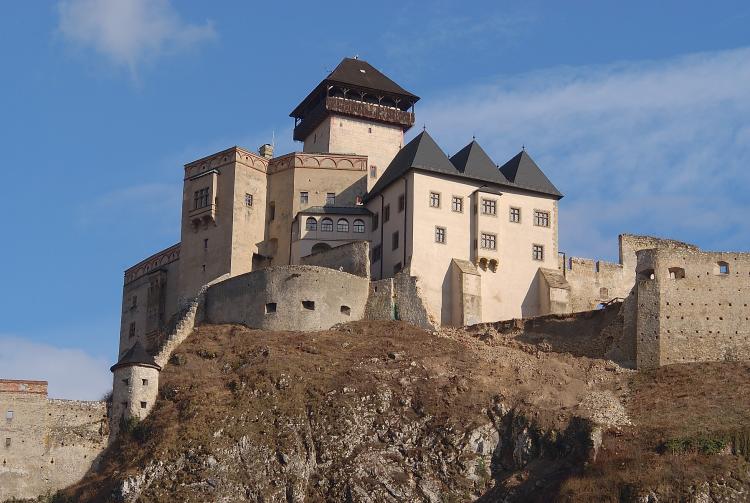
The castle was built over a settlement site that had existed from the Bronze Age through times of Celts and Germanic tribes to the Slavic settlement. 
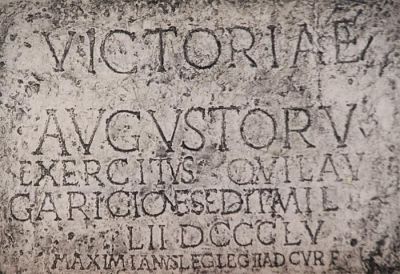
Roman inscription
The most important Roman epigraphic monument in Central Europe north of the Dunaj (Danube) river, preserved „in situ“. In the last third of the 2nd Century, the invasion of Germanic tribes of Marcomanni and Quadi started one of the most dangerous conflicts between the Roman empire and tribes of the Danube river.
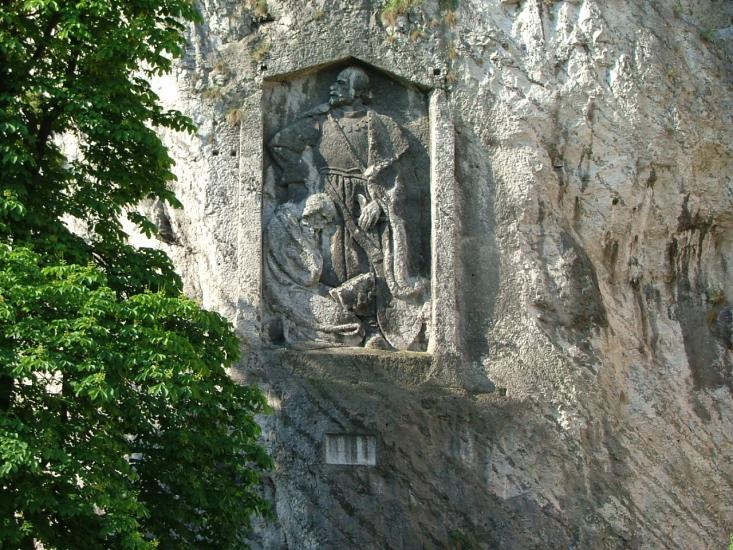
 

Relief of Ján Jiskra of Brandýs
In 19 15-1916, the Relief of the Victorious Hungaria was carved in the castle rock as a symbol of heroism of the former Ugria. The relief was designed by the sculptor Michal Kara.

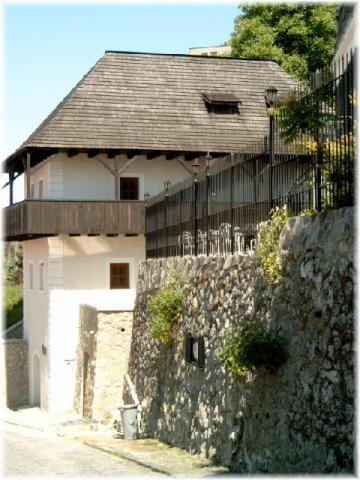
House of the City's executioner
The house dates back to 1580 and can be seen in the oldest vista of Trenčín.

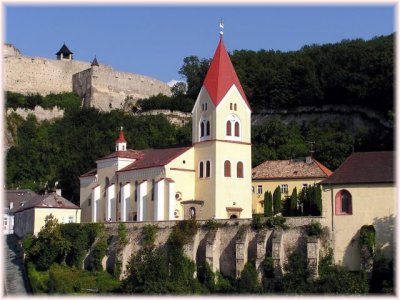
Roman Catholic Church of the Birth of Virgin Mary
Built in 1324, on the foundation of a 13th. Around the first half of the 15th century, the church was reconstructed into a hall-like three nave structure with a polygonal presbytery. In 1528, during a besiege of the castle by Katzianer, the church and the nearby St. Michael’s carner burned down.

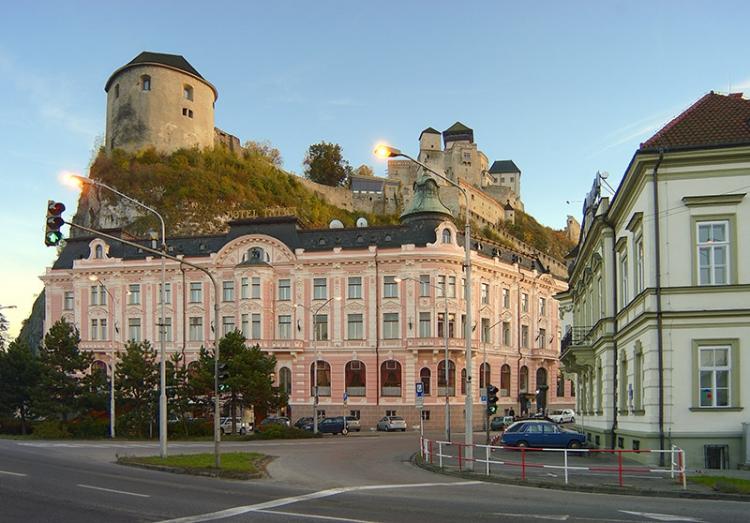
Hotel Tatra
Built by baron Armin Popper in 1901 in line with elements of the Secession style, according to a design by E. Bleier. The building was erected on the site of an older inn called At the Red Star. The hotel was named after the emperor Francis Joseph’s wife Elizabeth „ Erzsébet“ (today‘s cafe Sissi bears her name ). In 1919, the hotel was purchased by Tatra bank, and in 1921 the name was changed to Tatra hotel.

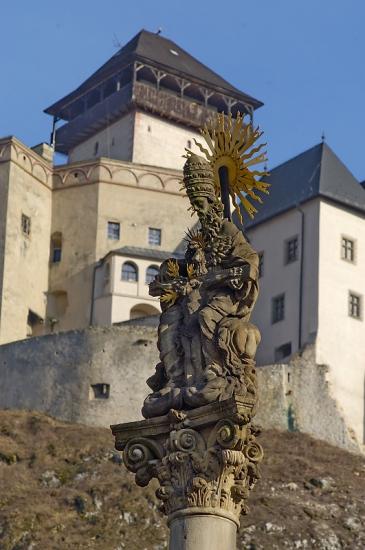
Plague Pillar
The pillar was built, in 1712, in the center of the square to commemorate a plague that hit Trenčín in 1710. Vienna stone-cutting masters that were working on the restoration of the Piarist Church at the time, created the pillar after the initiative of hereditary Lord of District, earl Mikuláš Ileszhazi.

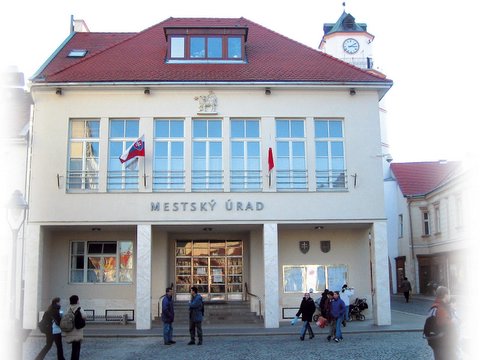
City Office
In 1663, the City office bought a house located on the square, next to the Lower City gate. Prior to the purchase, Magistrate's members' meetings took place in the individual members' homes. In the first half of the 16th century, meetings were held at this building, which, didn’d suit the ne eds of the Magistrate.

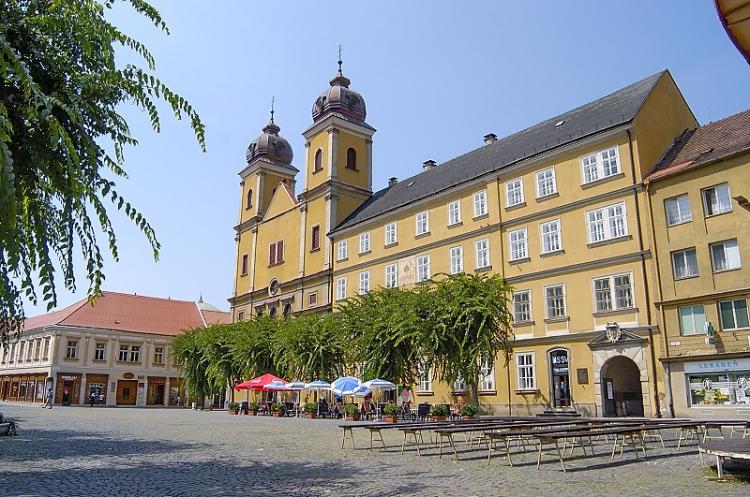
Early Baroque Convent Facility
A facility of the Convent Collegium, today's Piarist Gymnasium of J. Branecký, was built in 1653 – 1662. The complex was built as a three-nave, two-tract, four-story building with a central paradise court.